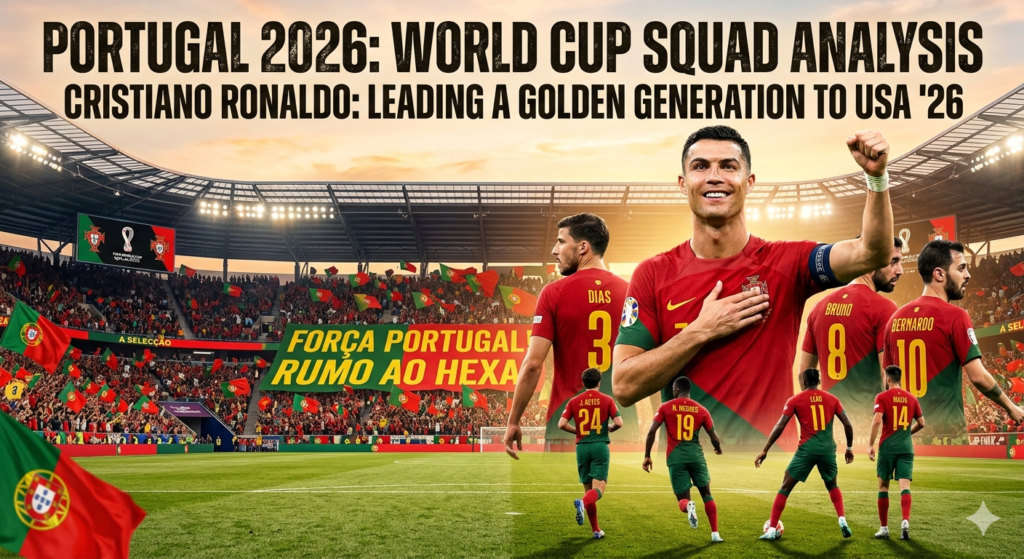
Here is an in-depth analysis of Portugal’s 2026 World Cup squad and their tactical blueprint.
The Official 2026 World Cup Roster
| Position | Players |
|---|---|
| Goalkeepers | Diogo Costa, José Sá, Rui Silva, Ricardo Velho* (training keeper) |
| Defenders | Rúben Dias, Gonçalo Inácio, Diogo Dalot, Nuno Mendes, João Cancelo, Matheus Nunes, Nélson Semedo, Renato Veiga, Tomás Araújo |
| Midfielders | Bruno Fernandes, Bernardo Silva, Vitinha, João Neves, Rúben Neves, Samuel Costa |
| Forwards | Cristiano Ronaldo, Rafael Leão, João Félix, Gonçalo Ramos, Pedro Neto, Francisco Conceição, Francisco Trincão, Gonçalo Guedes |
A Touching Tribute: Roberto Martínez notably called this a selection of “27 players plus one,” dedicating a symbolic honorary place in the squad to Liverpool forward Diogo Jota, who tragically passed away in a car accident in 2025.
Tactical Analysis: The Projected Lineup
Martínez has largely favored a fluid 4-3-3 or a staggered 4-2-3-1 that maximizes central control while unleashing elite pace on the flanks.
1. The Backline: Elite Resiliency
In goal, Porto’s Diogo Costa is the undisputed number one. Ahead of him, Manchester City’s Rúben Dias acts as the defensive general, likely partnered with Sporting’s elegant left-footed center-back Gonçalo Inácio.
The fullback positions are an embarrassment of riches. Nuno Mendes (PSG) provides lethal overlapping pace on the left, while Diogo Dalot or a highly versatile Matheus Nunes can lock down the right. With João Cancelo able to invert from either flank, Portugal can alter their buildup structure entirely mid-game.
2. The Midfield Engine: Peak Creativity
Portugal’s midfield is arguably the most dynamic in the tournament. Vitinha (PSG) has evolved into a world-class tempo director, typically sitting alongside his club teammate, the teenage prodigy João Neves, to form a press-resistant double pivot.
This structural base frees up Bruno Fernandes to do what he does best: create chaos. Operating as the primary playmaker, Fernandes’ progressive passing numbers remain elite, flanked by the tactical intelligence of Bernardo Silva, who seamlessly drifts between the right wing and the half-spaces.
3. The Frontline: Speed and the Ultimate Poacher
On the left wing, AC Milan’s Rafael Leão offers explosive, unstoppable 1v1 isolation play. On the right, Juventus’ Francisco Conceição or Chelsea’s Pedro Neto provide pure width and directness.
At the center of it all is Cristiano Ronaldo. Entering his record-breaking sixth World Cup, Ronaldo is no longer the dynamic winger of 2006 or 2018. Instead, he is the ultimate penalty-box predator. Backed by PSG’s Gonçalo Ramos and Al Nassr teammate João Félix, Portugal has tactical flexibility; if a game requires high-intensity frontline pressing, Ramos can step in, allowing Ronaldo to act as a lethal weapon off the bench.
The Ronaldo Paradox: Invincible or Inhibited?
The debate surrounding Ronaldo isn’t about his talent—it’s about squad dynamics.
- The Case for “Invincible”: Ronaldo scored heavily in the Saudi Pro League and during World Cup qualifying. His elite positioning, clutch gene, and peerless leadership give Portugal an aura. In tight knockout games, there is still no one you would trust more with a single chance.
- The Case for Caution: At 41, Ronaldo’s defensive work rate is minimal. If Portugal plays a heavy possession game, his lack of pressing can leave them vulnerable against elite transition teams like France or Brazil.
The Verdict
Portugal isn’t invincible, but they are absolutely among the top three favorites to win it all. Group K fixtures against DR Congo (June 17), Uzbekistan (June 23), and Colombia (June 27) should give them plenty of runway to find their perfect tactical rhythm before the knockout stages begin.
If Martínez manages Ronaldo’s minutes correctly and allows the creative midfield to dictate games, CR7 might just get the fairytale ending that has eluded him for two decades.